

Three New Books on Outer & Inner Work, Spring 2026
By Damaris Zehner
Worth Doing: Fallenness, Finitude, and Work in the Real World
W. David Buschart and Ryan Tafilowski
Paperback: IVP Academic, 2025
Buy Now: [ BookShop ] [ Amazon ] [ Kindle ]
A book by theologians for theologians, Worth Doing: Fallenness, Finitude, and Work in the Real World, addresses two “cruel” evangelical and cultural ideologies about work: You Are What You Do, and Do What You Love (8, 186-193). The first wrongly defines our nature, and the second sets an unreasonable standard for work in the real world. The authors claim these ideologies don’t take into account finitude, or the limits of our nature and our world, and fallenness, or the effects of sin.
They challenge the supremacy of the intrinsic view of work – the idea that because we are made in the image of God, work has intrinsic value and is part of what makes us human. That’s not wrong, but since too many jobs are dull or degrading, the authors stress instead the instrumental value of work: like Paul the tentmaker, we work not because we love the job but in order to live in a fallen world. “Whether we enjoy it or not, though, the way of wisdom is to see work for what it is: a genuine good of creation that is constrained by finitude and beset by fallenness” (181). The book concludes, with the writer of Ecclesiastes, that “Work is nonetheless a good gift from a good God and therefore worth doing” (195).
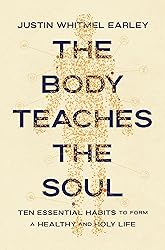
The Body Teaches the Soul: Ten Essential Habits to Form a Healthy and Holy Life
Justin Whitmel Earley
Paperback: Zondervan, 2025
Buy Now: [ BookShop ] [ Amazon ]
The Body Teaches the Soul, by Justin Whitmel Earley, addresses a persistent heresy – that spirituality is good and physicality is evil. Earley wants to “erase all the lines I had drawn between what is ‘spiritual’ and what is ‘physical’,” and instead see life as a “whole and integrated thing” (8). Each chapter – on breathing, rest, exercise, sex, pain, fasting and feasting, technology, worship, and death –includes physical and spiritual disciplines to try. These are not new inventions but Christian truths so timeless that many of them have Latin tag lines – ora et labora (prayer and work), lex orandi, lex credendi (how we pray is how we believe), or memento mori (reminder of death).
Although the book cites scientific studies of the connection between brain and body, living the Christian faith remains central. Most striking was Earley’s theme that the body is not to be ignored, idolized, or looked at but rather to be looked through (14), that we are to use our whole selves to “image” God to the world. Every chapter offers inspiring and practical wisdom, and the book closes with the glorious hope of the bodily resurrection, when we will finally have peace and perfect union between body, mind, and spirit.
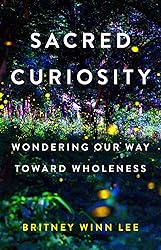
Sacred Curiosity: Wondering Our Way Toward Wholeness
Britney Winn Lee
Paperback: Broadleaf Books, 2026
Buy Now: [ BookShop ] [Amazon][ Kindle ]
In this engaging book, Britney Winn Lee invites us to experience the healing force of curiosity. Using psychological research, biblical references, and many personal anecdotes, she shows us how, in becoming curious, we slow down, step outside ourselves, build connections, and discover awe. Despite the title, the focus of Sacred Curiosity is more therapeutic than theological; however, as a pastor, the author understands that mental health is tied to spiritual health. Using statistics and examples, she gives us encouragement to find “[t]ransformation and healing . . . through the inner doors that curiosity unlocks on personal and collective levels” (70). As we make the “journey from the worship of certainty to the growing freedom and healing of curiosity” (xii), we find ourselves more welcoming of difference and more able to conquer shame. Sacred Curiosity shows us that being curious “is an act of faith in a big, complex God of a big complex world” (9) and is the beginning of a life of variety, color, and health.
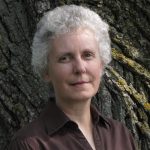
Damaris Zehner
Damaris Zehner is an essayist, poet, and teacher of composition, rhetoric, literature, and ESL. She has worked as a Peace Corps volunteer and missionary in Africa, Asia, and the Caribbean, as well as in the United States. She lives in Indiana.
 Reading for the Common Good From ERB Editor Christopher Smith "This book will inspire, motivate and challenge anyone who cares a whit about the written word, the world of ideas, the shape of our communities and the life of the church." -Karen Swallow Prior Enter your email below to sign up for our weekly newsletter & download your FREE copy of this ebook! |
 Understanding Christian Nationalism [A Reading Guide]
 |
 Most Anticipated Books of the Fall for Christian Readers! Most Anticipated Books of the Fall for Christian Readers!
|
 Hilarious One-Star Customer Reviews of Bibles Hilarious One-Star Customer Reviews of Bibles |