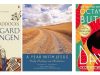
Here are some excellent new theology books * that will be released in June 2020 :
* broadly interpreted, including ethics, church history, biblical studies, and other areas that intersect with theology
See a book here that you’d like to review for us?
Contact us, and we’ll talk about the possibility of a review.
  |
Justice and the Way of Jesus: Christian Ethics and the Incarnational Discipleship of Glen StassenDavid Gushee / Reggie Williams, Eds.Orbis Books This skillfully edited volume presents a rich and broad engagement with Glen Stassen’s concept of “incarnational discipleship”–a major contribution to the discipline of Christian ethics outlined in his last book, A Thicker Jesus (2012). Glen believed that his approach could strengthen faithfulness to Jesus Christ in the church and foster a stronger public witness in American society. Exploring the term “incarnational discipleship” and its relevance for today are Lisa Sowle Cahill, Jacob Alan Cook, Miguel A. De La Torre, Stacey Floyd-Thomas, George Hunsinger, Hak Joon Lee, Peter J. Paris, Larry Rasmussen, Ron Scott Sanders, Peter M. Sensenig, and the editors.
  The Ascetic Life, The Four Centuries on CharityMaximus the ConfessorAngelico Press St. Maximus the Confessor (c. 580–662), saint and martyr, might well be called the Saint of Synthesis. His thought, no less than his geographical wanderings, place him between Rome and Byzantium, between the theologies of East and West, and between the early Middle Ages and the ancient Church, whose representatives and traditions (which during his day had suffered much at the hands of imperial and ecclesial censure) he salvaged and brought back to the attention of his contemporaries. In this, we may take him as an exemplar for our own time, which demands of us as well such a re-excavation of the traditions of the Church as we seek also to bridge the divergences of the past (along with others that have meanwhile come to roost) in our present spiritual quest. The Ascetic Life takes the form of question and answer between a novice and an old monk. This dialogue springs directly from the nature of Christian life, centering above all on the quest for salvation, that is, the Lord’s purpose in His Incarnation—for it is by learning to make this purpose our own that we shall be saved, or deified, as St. Maximus would say. Once this purpose has been made clear and embraced, the three principal virtues required for attaining it are then explored—love, self-mastery, and prayer. Love tames anger, self-mastery overcomes desire, and prayer joins the mind to God. The Four Centuries on Charity is written in the form of sententious or gnomic literature, which was first fixed in “centuries” by Evagrius Ponticus, both the number 100 and the number of the centuries being significant: the first as a perfect number referring to the One, God; and the other as representing the four Gospels. St. Maximus himself offers concision as the reason for his choice of the sententious form, for it facilitates the work of the memory in order that the reader may lay by a store of memorable, pithy sayings upon which to dwell prayerfully. |
<<<<< PREV. PAGE |
|

 Reading for the Common Good From ERB Editor Christopher Smith "This book will inspire, motivate and challenge anyone who cares a whit about the written word, the world of ideas, the shape of our communities and the life of the church." -Karen Swallow Prior Enter your email below to sign up for our weekly newsletter & download your FREE copy of this ebook! |
 Understanding Christian Nationalism [A Reading Guide]
 |
 Most Anticipated Books of the Fall for Christian Readers! Most Anticipated Books of the Fall for Christian Readers!
|
 Hilarious One-Star Customer Reviews of Bibles Hilarious One-Star Customer Reviews of Bibles |