
 Comedy has cleaned up its act. Can churches?

A Feature Review of
Actually, Nevermind: Essays
Taylor Tomlinson
Hardcover: Gallery Books, 2026
Buy Now: [ BookShop ] [ Amazon ] [ Kindle ] [ Audible ]
Reviewed by Emma Fulenwider
In 2012, comedian Tosh.0 famously harassed a female audience member who didn’t find his rape jokes funny. Around that time my husband and I attended a Christmas event at a local comedy club and found ourselves bombarded by sexually explicit jokes. It made us never want to set foot in a comedy club again. Then, in 2016, Dry Bar Comedy in Provo, Utah broke the chokehold that New York City and Los Angeles had on American Comedy by proving that not only is clean comedy funnier, it is wildly profitable. As the era of shock-and-raunch comedy crawls back into the primordial soup from whence it came, clean comedians have made it safe again to listen to comedy in the car with your kids and share clips with your in-laws.
A comedian’s job is simple, as Taylor Tomlinson states in her recent book Actually, Nevermind. “Everything’s already been done. I’m not trying to say things nobody has ever said before, I’m just trying to say it differently. I want to say what you’ve already thought, but couldn’t find words for.” If you haven’t heard of Taylor Tomlinson, she is a now-risen star in the comedy scene. I would say she is a “rising” star, but once you’ve had four Netflix specials, a late-night show, and a book, there’s not a lot of ladder left to climb.
Tomlinson comes to the page not as a comedian but a writer, a natural talent she attributes to her mother who passed away at the age that Tomlinson is now. Through personal and irreverent bits on losing her mother, pursuing a career in comedy, and her relationships to partners, family, religion, and health, Tomlinson’s wit and wisdom are not revelatory but repackaged in words you’ve never heard before. The overarching theme of Tomlinson’s collection of essays is that, as an adult, she has learned to unlearn and re-learn everything she thought she knew, and she extends to the reader the same courtesy—with the presumption that the reader has been awaiting someone to grant them permission. By her own admission, Tomlinson finds it hard to shake her identity as the eldest daughter, and throughout the book she assumes a Big Sisterly posture toward the reader that, like her biological siblings, the reader didn’t necessarily sign up for.
As a fellow eldest daughter, I felt her advice sometimes came across as old news, fake news, or unsolicited and therefore easy to dismiss. At other times, her words were the big-sistering that I needed. (Specific examples being: “I don’t know you, but you’re probably lactose intolerant,” and “Complaining about your weight makes your friends feel like you’re judging them.”)
Tomlinson’s style oscillates chapter by chapter between cutting and plodding, at times wielding seven-word sentences like a jedi with a lightsaber, at others following an outline like a highschooler turning in her homework. But on the whole, her knack for Saying The Thing is to be respected. Not since Bill Bryson’s biography of Shakespeare have I so enjoyed reading a couple hundred pages on the theme of not-really-knowing.
Members of the faith community may find it hard to appreciate Tomlinson’s collection because she is an openly queer atheist. I would argue that if we expect queer atheists to listen to our sermonizing, we need to be willing to listen to them first. To do so is beneficial to those who can. Because she has left the faith community, Tomlinson possesses the freedom to drop truth bombs about the experience she shares with a growing population of those who have left church because of emotional and spiritual abuse. And she does so with uncommon grace. The chapter where she addresses her estrangement from her father is more respectful of the family bond than nearly every statement I’ve seen from estranged parents about their kids. Her story challenges the dogma that estranged children don’t value relationships and queer people hate God.
Despite her prescriptive asides, Tomlinson doesn’t pretend to be the final word on health, relationships, or religion, but her perspective offers the faith community an opportunity to reopen the dialog with the queer community that died on the vine for lack of mutual respect and understanding. Her book is a safe place for church members to feel their feels, disarm their triggers, and then think again. The title itself speaks to the human right to have an opinion and then change it, a practice Tomlinson herself has been performing on stage for over a decade.
It’s hard to deconstruct and reconstruct your Christian beliefs in your 20s when you’re on your own, surrounded by peers who either blindly follow the beliefs you’re questioning or who aggressively disrespect religion as if it’s the cheat code to skipping the level of identity formation called personal philosophy. There were many times I took the bait and answered a philosophical question in a non-religious setting, only to spend the next hour being rudely singled out and blamed for all the world’s problems.
The last time I let myself be targeted in this way was my last night living in Fresno. I was 23, a college grad, living on my own, soon to be married, smoking a cigar on the back patio at a house party, doing my best to ignore a rising tide of church-bashing when the alt-sexual person next to me asked the question that people always asked: “Why can’t you just stop believing in God?”
This time, however, I heard it differently. Not as a challenge that pitted me against everyone, but a question that united those of us who were serious about the business of growing up. Instead of quoting scripture at people who don’t believe in scripture anyway, I said, “A thing can become so true that you can’t deny it even if you want to. Even if you know people will hate you for it. You can relate to that, because you’re gay.” That was the final word. Just like that, we understood each other. The argument went up in cigar smoke, and peace fell on the patio.
Beyond the grudging Catholicism of Jim Gaffigan, the faux intersectionality of Pete Holmes, and the closet Mormonism behind Studio C, Tomlinson the reluctant atheist is the comedian the faith community needs right now because she shows us ourselves with the embarrassed kindness of a stranger who takes you aside at a party and whispers FYI, your zipper is open.
I hope, someday, that churches can take a cue from the comedy revival and make pointy buildings a haven for the traumatized, the marginalized, and the unbeliever. Imagine a gospel so clean that our queer atheist neighbors feel safe listening to it with their kids in the car and sending clips to each other.
At its core, Actually, Nevermind is the take-it-with-a-grain-of-salt manual on being human that the author wishes her mother had left to her. As Tomlinson deliberates whether to become a parent herself, she may have unwittingly written a book that would spare her future children the particular pain of being a stranger to their mother while offering the disclaimer that she herself has not yet figured this out. Because even in our 30s, we’re still in the business of growing up.
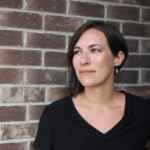
Emma Fulenwider
Emma Fulenwider is a writer and literary agent with WordServe Literary. A former indie publisher and writing contest judge, she is pursuing her MFA in Creative Writing from Ashland University. Emma lives in Sacramento, California in a house full of books.
 Reading for the Common Good From ERB Editor Christopher Smith "This book will inspire, motivate and challenge anyone who cares a whit about the written word, the world of ideas, the shape of our communities and the life of the church." -Karen Swallow Prior Enter your email below to sign up for our weekly newsletter & download your FREE copy of this ebook! |
 Understanding Christian Nationalism [A Reading Guide] |
 Most Anticipated Books of the Fall for Christian Readers! |
 Hilarious One-Star Customer Reviews of Bibles |