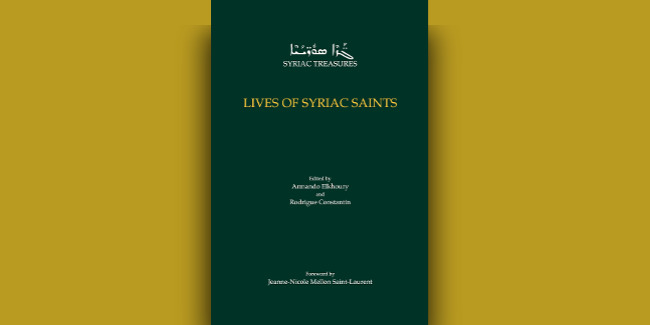
Today is All Saints Day, the day on the Church calendar on which we celebrate the great cloud of witnesses that have gone before us.
How much do you know about the history of the saints?
For All Saints Day, we offer the following history of the church in twenty biographies , of one saint from each century from the first century to the twentieth century. (It’s too early to choose a saint to celebrate from the twenty-first century.) With each we offer a brief snippet of their lives, and a biography of each, most of which can be downloaded for FREE. Many of these saints lives and work intersect with those who went before them, and what emerges as we dig into these stories is a fuller and richer history of God’s presence and work among the people of God throughout the full span of our history.
Tenth Century:
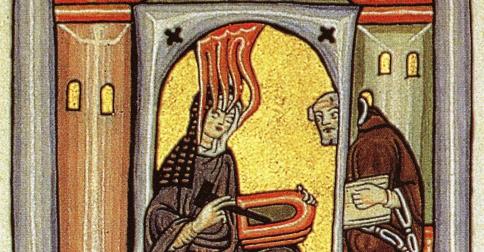
Hildegard of BingenHildegard of Bingen, OSB (1098 – 17 September 1179), was a German Benedictine abbess, writer, composer, philosopher, Christian mystic, visionary, and polymath. She is one of the best-known composers of sacred monophony, as well as the most-recorded in modern history. She has been considered by many in Europe to be the founder of scientific natural history in Germany. Hildegard’s fellow nuns elected her as magistra in 1136; she founded the monasteries of Rupertsberg in 1150 and Eibingen in 1165. She wrote theological, botanical, and medicinal texts, as well as letters, liturgical songs, and poems, while supervising miniature illuminations in the Rupertsberg manuscript of her first work, Scivias. There are more surviving chants by Hildegard than by any other composer from the entire Middle Ages, and she is one of the few known composers to have written both the music and the words. One of her works, the Ordo Virtutum, is an early example of liturgical drama and arguably the oldest surviving morality play. (via Wikipedia) |
Hildegard of Bingen:
|
<<<<< PREV. PAGE |
|
 Reading for the Common Good From ERB Editor Christopher Smith "This book will inspire, motivate and challenge anyone who cares a whit about the written word, the world of ideas, the shape of our communities and the life of the church." -Karen Swallow Prior Enter your email below to sign up for our weekly newsletter & download your FREE copy of this ebook! |
 Understanding Christian Nationalism [A Reading Guide]
 |
 Most Anticipated Books of the Fall for Christian Readers! Most Anticipated Books of the Fall for Christian Readers!
|
 Hilarious One-Star Customer Reviews of Bibles Hilarious One-Star Customer Reviews of Bibles |