The People Who Wait

A Feature Review of
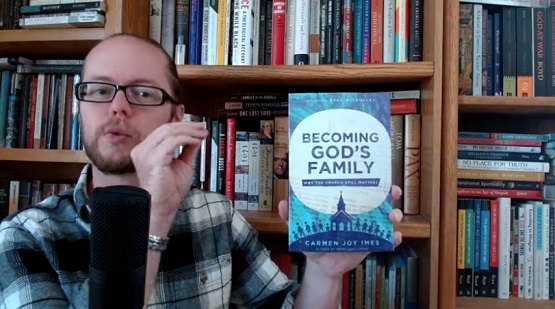
Becoming God’s Family: Why the Church Still Matters
Carmen Joy Imes
Paperback: IVP Academic, 2025
Buy Now: [ BookShop ] [ Amazon ] [ Kindle ] [ Audible ]
Reviewed by Hannah Miller King
As a college student, I was privileged to watch a handful of classmates come to faith in Jesus for the first time. Most of them had grown up without a strong religious influence, and embracing Christianity was an enormous transition. I quickly realized they needed more than another eighteen-year-old encouraging and coaching them in their new faith. They needed the church.
In her new book Becoming God’s Family, Carmen Imes articulates what my college friends and I were so fortunate to experience: In the church, we learn how to become God’s people. Christians were never meant to follow Jesus as isolated individuals or as homogenous age groups. Instead, we’re invited to join a diverse community in which people of all ages, life stages, ethnic and socioeconomic backgrounds can be united in love for God and for each other. In the church, my friends found mentors who modeled what it looks like to follow Jesus after college. They interacted with children whose prayers and questions were refreshingly honest. They partook of the Lord’s Supper. In the church, we encountered God more holistically than if we’d kept to ourselves on campus.
Such a positive depiction of the church can seem a little bit simplistic. Sure, the church can be great, but what about when it’s not? Refreshingly, this question is front and center throughout the book. Imes names the church’s many problems and sins without hesitation or sugar-coating. She addresses leadership corruption, racial prejudice, and the #churchtoo movement in the first two chapters. Through her willingness to hold the tension of God’s presence among an imperfect people, we learn to resist all or nothing thinking about God’s family. We are beautiful and broken, in need of serious reform and the object of God’s affection.
These things can both be true because the church is first and foremost God’s project in the world: we are becoming his family as we grow up into his image, together. We bear witness to what God has already done in and among us, but Imes argues that our primary vocation as God’s people is to wait on him to act: “The mission of the church is and always has been to bear witness to something outside itself by waiting and praying with the world for an encounter with God” (7). Before we can do any good work, God must work on us.
I was a bit surprised by her description of the church as “the people who wait,” but I was also inspired by it. In a time of widespread disillusionment, a church expectant feels more credible than a church militant. We are called to bear witness to the world, but only as those who “recognize that without God we cannot accomplish what he intends” (13).
Another thing I found refreshing about this book is its heavy use of Old Testament narrative. Imes draws on her expertise as a biblical scholar to help us think about God’s people throughout the canon of Scripture, beginning with Abraham. This whole-Bible approach (as opposed to the almost exclusively New Testament approach more common in discussions of the church) allows us to reflect on contemporary ecclesial questions with more robust biblical lenses. As with any thorough exploration of Old Testament stories— complete with genealogies, ancient names, and complex details— some of the chapters require attentive reading. But the writing is accessible enough for beginners, and each chapter includes a “Digging Deeper” section with additional resources for those who want more.
Imes’s ecclesiology is not hugely technical. This book does not present a systematic theology of the church. Instead, through biblical narrative interspersed with personal reflection, it reads more like a love letter or a longform sermon. At times I was blessed as much by her anecdotes about women’s quilting groups and other small, local expressions of the body of Christ as I was by her biblical exposition. In an era when many of the church stories we hear are exposes, it was an encouraging counterbalance to hear real-life examples of many congregations who are faithfully living the gospel in their context.
As a pastor, I was also challenged by this book. Heartwarming anecdotes aside, Imes unflinchingly calls out problems like homogeneity, individualism, and consumerism in the church. It is natural to organize with others who are just like us— and in fact it’s easier to grow a church that way— but the biblical vision is much more diverse and communal than we tend to achieve or even attempt. It prompted me to reflect: Am I discipling people into a consumeristic model of church? Am I truly welcoming of those who look, think, vote, or eat differently than I do? Am I praying for a healthy community, or merely a convenient one?
I was also challenged by Imes’s shrewd examination of leadership corruption and coverup. She argues that exploitation of the vulnerable is one problem; church leaders’ failure to address it appropriately is another. Looking at the horrific violence in the book of Judges as an example, she writes, “[the Benjaminites] prefer to fight their fellow Israelites to the death rather than hold their brothers accountable for their sin. This reveals everything we need to know about how far they have fallen. Any community that attempts to shield perpetrators instead of their victims is inviting God to bring judgment” (48). These are hard words that I hope I and my fellow church leaders can hear with fear and trembling.
If I’m honest, I do at times wonder whether we will have ears to hear or not. The longer I am in ministry, the less idealistic I feel about the church. I am growing more aware of our failures to reflect God’s character and of our failures to own and learn from our mistakes. However, this book reminded me that idealism can be damned. Our greatest need isn’t to feel good about ourselves; our greatest need is God. And the church is the fellowship of people who pray, “Come quickly, Lord Jesus.” That is why we keep showing up, however hopeful or jaded we feel about our track record—so that we can keep asking and keep praying for his kingdom to come. Imes closes with this invitation:
“Ironically, the church is an institution oriented around the truth of what it cannot do. Even if we all pitch in…we cannot redeem the world. We gather in worship to recognize that we need God’s intervention. We need the surprising work of transformation that only the Spirit can bring. So we gather and wait together for God to make all things new. Bit by bit he does that work as we show up to watch and wait and pray.”
When I think back to my college friends discovering faith, I remain grateful that I invited them to church. It’s not a perfect place; God’s people have needed rescue from the beginning. But in the church, I do believe my friends and I will always be able to find the Rescuer. He has promised to never leave us or forsake his people. He has promised to complete the good work he started in us, even when that work involves painful pruning. And he has promised that through us, he will accomplish that work in others too. The real scandal of the church is that not that we are broken, but that God uses broken people to bring his healing. In this heartfelt book, Imes gives us permission to embrace this mystery, and to love it.
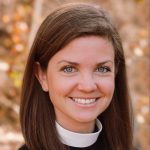
Hannah Miller King
Hannah Miller King is a priest and writer in the Anglican tradition. She is associate rector of The Vine Anglican Church in Clyde, North Carolina and author of Feasting on Hope: How God Sets a Table in the Wilderness (IVP, 2026). You can find her at hannahmillerking.com
 Reading for the Common Good From ERB Editor Christopher Smith "This book will inspire, motivate and challenge anyone who cares a whit about the written word, the world of ideas, the shape of our communities and the life of the church." -Karen Swallow Prior Enter your email below to sign up for our weekly newsletter & download your FREE copy of this ebook! |
 Understanding Christian Nationalism [A Reading Guide]
 |
 Most Anticipated Books of the Fall for Christian Readers! Most Anticipated Books of the Fall for Christian Readers!
|
 Hilarious One-Star Customer Reviews of Bibles Hilarious One-Star Customer Reviews of Bibles |