


Three New Books on the Persistence of Love
Reviewed by Damaris Zehner
Make Me an Instrument of Your Peace: Becoming More like Jesus Through the Prayer of St. Francis
Mark DeYmaz
Paperback: NavPress, 2026
Buy Now: [ BookShop ] [ Amazon ]
Make Me an Instrument of Your Peace, by Mark DeYmaz, uses the so-called Prayer of Saint Francis to outline a structured set of goals for any Christian to follow. The book is clearly organized and easy to read, but in some ways I found it so simple and obvious it seemed shallow. However, DeYmaz begins the book with insight into a great challenge for American Christians today: “studies show that while many Americans have confidence in Jesus, they do not trust Christians or the church, which they perceive as failing to reflect the spirit of the biblical Christ” (4); “they see Christians as hypocritical, judgmental, and discriminatory” (6).
The simple, obvious behaviors of the Prayer of Saint Fracis – sowing love, pardoning injuries, consoling rather than seeking to be consoled, and understanding rather than seeking to be understood – are suggested as a means of restoring that trust.
“By quietly advancing the common good, we offer a credible witness to the gospel without saying a word. In doing so, we help shift negative perceptions, dismantle skepticism, and patiently lead others toward . . . where they can encounter Jesus, explore biblical truth, and ultimately, we hope, choose to follow him” (7).
Saint Francis is credited with saying, “Preach the Gospel at all times; when necessary, use words.” Make Me an Instrument of Your Peace reminds us of the beauty and power of that simple way of love.
Love Your Neighbor: How Psychology Can Enliven Faith and Transform Community
Katherine M. Douglass and Brittany M. Tausen
Paperback: Eerdmans, 2026
Buy Now: [ BookShop ] [ Amazon ]
Love Your Neighbor: How Psychology Can Enliven Faith and Transform Community is for everyone who has ever passed by on the other side of the road. We know Christ’s second great commandment, but too often we don’t stop to help our neighbors or even notice that they need help. This book identifies the conditions and habits of mind that determine whether and how we show love for our neighbor. Citing studies in social psychology, Douglass and Tausen explain, for example, that people are more likely to help if they feel they have time and expertise, if they believe no one else is likely to step in, and if they can avoid contempt or a scarcity mindset.
The authors are not using psychology to excuse sin; instead, they offer a means of understanding why we fall short and what, in conjunction with prayer, we can do to change. They challenge us to redesign our lives in order to see and reach out to the people who cross our path. Each chapter ends with reflections and exercises to guide us to slow down, notice, take responsibility, respond with generosity, and persist in the face of opposition. Love Your Neighbor is a practical and inspiring invitation for us to choose, like the Samaritan, to cross the road.
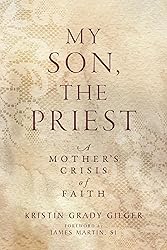
My Son, the Priest: A Mother’s Crisis of Faith
Kristin Grady Gilger
Paperback: Monkfish, 2025
Buy Now: [ BookShop ] [Amazon]
I love this book – though I’m not sure what it is. It covers a mother’s reaction to her son joining the Jesuits and the reasons for those reactions, but its genre is unclear. It could be a memoir, since it covers the author’s dysfunctional upbringing and her rupture with the Catholic church, or an examination of Catholicism through the eyes of a feminist. It’s also an introduction to the work of the Jesuits and the process men go through to join, and it covers a mother’s struggles with her child’s choices. Her son, who wrote the epilogue, concludes, “she has written this entire book because she was utterly unwilling to allow our relationship – hers and mine, I mean – to wither” (234). However complex the book, Gilger, a journalist, knows how to tell a story. I couldn’t stop reading even when her honesty and hard-headedness made her difficult to like.
Although the subtitle suggests a Road to Damascus experience, Gilger doesn’t have one. Jacob and the angel might be a better biblical parallel: through wrestling with her son’s faith, Gilger ultimately receives a blessing. She explains,
“I resist mystery. I want to count things and have them explained. But I have seen grace. . . . I have experienced the favor of loved ones and witnessed the efforts of strangers who . . . give love and mercy and unmerited favor, that would be inexplicable in a world without divine influence.
I still find it hard to be Catholic, but I have discovered it’s much easier to reject the church when I can hold it at a distance. Close up, the flaws are much harder to see” (206).
Profound advice for any Christian.

Damaris Zehner
Damaris Zehner is an essayist, poet, and teacher of composition, rhetoric, literature, and ESL. She has worked as a Peace Corps volunteer and missionary in Africa, Asia, and the Caribbean, as well as in the United States. She lives in Indiana.
 Reading for the Common Good From ERB Editor Christopher Smith "This book will inspire, motivate and challenge anyone who cares a whit about the written word, the world of ideas, the shape of our communities and the life of the church." -Karen Swallow Prior Enter your email below to sign up for our weekly newsletter & download your FREE copy of this ebook! |
 Understanding Christian Nationalism [A Reading Guide]
 |
 Most Anticipated Books of the Fall for Christian Readers! Most Anticipated Books of the Fall for Christian Readers!
|
 Hilarious One-Star Customer Reviews of Bibles Hilarious One-Star Customer Reviews of Bibles |