[easyazon-image align=”left” asin=”0802866476″ locale=”us” height=”160″ src=”http://ecx.images-amazon.com/images/I/41Bk8RLSoUL._SL160_.jpg” width=”107″]Page 2: Fyodor Dostoevsky – Notes from the House of the Dead
Notes from the House of the Dead is not an easy read. However, thanks to Boris Jakim’s fluid translation, it is easily read. The introduction was helpful, and the textual notes bring to light details of nineteenth century Russian life that would otherwise be confusing. These tools render the book more intelligible for a contemporary reader. Still, weighing in at three hundred fairly dense pages, the book requires some commitment. Here are three reasons the commitment is well worth your while.
First, the book provides a fascinating window into Dostoevsky’s mind. In the Introduction, James Scanlan describes the book as “a thinly fictionalized memoir (vii).” In the 1850’s, Dostoevsky served four years as a political prisoner in Siberia. This experience transformed his faith and his understanding of the Russian people. Although he was with people who had committed horrible crimes, he perceived a goodness that was not wholly muted by prison life. Gorianchikov’s story sheds light not only on Dostoevsky, but on his future work. The characters we meet in this book find their counterparts in Dostoevsky’s novels, and the possibility of faith and hope in the midst of darkness remained as a significant theme in his writing.
Second, the book provides an opportunity to reflect on an important justice issue of our own time: America’s current system of incarceration. When this book was published in the 1860’s, it was revelatory for the Russian public. This revelation was one impetus for reform. As this new translation makes Dostoevsky’s work more widely available to the American public, it invites us to reflect on our own prisons. According to the American Civil Liberties Union (ACLU.org), one in every ninety-nine adults in this country is behind bars. I do not claim that our detention facilities are equivalent to Russian penal colonies. Yet, it is noteworthy that Gorianchikov complains less about hard labor and shackles than about despair, and the bleakness of a life lived without freedom. Gorianchikov’s question still rings clear: how are our prisons shaping the souls of our neighbors? And who is taking notes?
Third, the book opens before us large questions about our existence, incarcerated or not. My intention is not to minimize the circumstances unique to prison life, but to recognize that Dostoevsky raises questions that are fundamental to all our lives. The careful reader of this book will likely find herself asking: what forces imprison me? How has my capacity for hope been diminished by the world around me? How can I embrace freedom and kindness in the midst of a world full of dehumanizing forces? What are the possibilities for resurrection and new life? I suspect that, like Fyodor Dostoevsky, many readers of this publication find their answers to those questions in the gospel. But those answers don’t come easily, and the questions still deserve our thoughtful, prolonged attention.

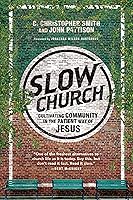
C. Christopher Smith is the founding editor of The Englewood Review of Books. He is also author of a number of books, including most recently How the Body of Christ Talks: Recovering the Practice of Conversation in the Church (Brazos Press, 2019). Connect with him online at: C-Christopher-Smith.com
 Reading for the Common Good From ERB Editor Christopher Smith "This book will inspire, motivate and challenge anyone who cares a whit about the written word, the world of ideas, the shape of our communities and the life of the church." -Karen Swallow Prior Enter your email below to sign up for our weekly newsletter & download your FREE copy of this ebook! |
 Understanding Christian Nationalism [A Reading Guide]
 |
 Most Anticipated Books of the Fall for Christian Readers! Most Anticipated Books of the Fall for Christian Readers!
|
 Hilarious One-Star Customer Reviews of Bibles Hilarious One-Star Customer Reviews of Bibles |