
 A Substantive Pastoral Resource
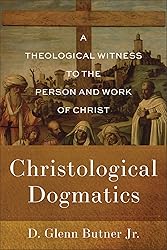
A Review of
Christological Dogmatics: A Theological Witness to the Person and Work of Christ
D. Glenn Butner Jr.
Paperback: Baker Academic, 2026
Buy Now: [ BookShop ] [ Amazon ] [ Kindle ]
Reviewed by Leonard J. Vander Zee
Choosing a title is always a tricky thing; how do you reach the intended audience? “Christological Dogmatics” may be a good title for a book in a seminary bookstore, but it doesn’t exactly draw the attention of the general reader. Still, as the author himself indicates, his main audience is for seminary or other theological graduate students. However, I think that this book is also a much-needed resource for the working pastor and preacher.
One of the great needs of the church today is preaching that has theological depth and integrity. As Butner points out in the book’s introduction, dogmatics, or theological reflection on the biblical text, has three major tasks: 1. “To preserve theological truth against heresy…” 2. For “instruction ranging from the initiation of converts to the preparation of church leaders….” 3. The “drive to systematize the Bible’s teaching.” It seems to me these are lacking in many churches today. Preaching and teaching that lack a theological backbone for the formation of Christian disciples will sink into moralistic Bible stories and therapeutic advice.
Jesus Christ is at the center of the church’s life and message. As the subtitle of the book asserts, it seeks to offer “witness to the person and work of Christ.” But that means we have to articulate something about who Jesus Christ is and what his work actually accomplishes. That is a theological task that every pastor needs to take seriously. I heartily commend this book to my fellow pastors and preachers as a resource for this task.
The book is arranged by Christological loci, beginning with incarnation and proceeding through questions of Christ’s two natures, union with Christ, atonement theories, and finally to Christ’s ascension and exaltation. With the use of the voluminous biblical index, a preacher can find the theological background and implications of a host of key passages.
For example, if a pastor is planning a sermon on Jesus’s prayer in John 17, Butner provides important guidance for how to understand Christ’s prayer that “they may be one as we are one” (John 17: 22). He shows how this passage has profound implications for our lives and destiny and illuminates its theological possibilities. In commenting on the key kenosis passage in Philippians 2, Butner probes deeply its theological implications as well as providing necessary guiderails to avoid misunderstandings.
Along the way Butner offers sections on areas of Christology that are often overlooked by most Christological studies. His chapter on incarnation has a whole section on Irenaeus’s wonderful scheme of Recapitulation, with Christ as the second Adam who recapitulates Adam’s fallen humanity with a new and perfected human life. He commends it as a primary lens through which to understand Christ’s work.
Another area of Christology often overlooked is the doctrine of theosis, or divinization, which is deeply embedded in Eastern Orthodox theology but not very much discussed in the West. Theosis looks toward the end, the completion, of Christ’s saving work, which contrasts with the typical Western view of the saints going to heaven to live in eternal bliss. On the basis of passages like I Peter, which depicts human destiny as “participation in the divine life,” theosis sees human destiny in terms of deep involvement through the Son in the trinitarian dance of life and love. Butner lays out the beautiful contours of this doctrine while also addressing its limits.
While Butner doesn’t hesitate to show where certain theological assertions fall outside the boundaries of orthodox faith, he is fair-minded about including points of view with which he may disagree without branding them as heretical. He often sympathetically highlights theological insights from the global south, making this work even more widely useful.
Of course, the most crucial and contested area of Christology in recent decades is the doctrine of the atonement, and particularly penal substitutionary atonement, which has become a baseline doctrine for evangelicals. Butner clarifies the doctrine by avoiding the crasser elements, which imply a separation in the God-head between the wrathful Father and the penalized Son. Still, Butner insists that atonement needs to be understood as penal in order to meet the demands of God’s righteousness. He writes that “Satisfaction can thus be understood as the en-humaned Son offering what was owed to the Father and thereby bringing humanity back into the communion of the Trinity.”
I was disappointed that Butner does not include the important recent work by Rillera and Moffit, arguing that the key Old Testament sacrifices were not penal in nature, as payments for sin, but rather offerings to God demonstrating the life and commitment of the offeror. In this understanding, Christ’s death is an offering to the Father of a perfect and complete human life; atonement is not payment or punishment for sin, but rather, the Son, who “knew no sin, was made to be sin” offering himself on our behalf. Jesus Christ took on the full depths of sin and rose again to triumph over sin and death. The awfulness of sin was fully exposed and its power expunged in the death and resurrection of the Son.
On the other hand, Butner devotes an entire chapter, entitled “Christus Victor,” to other important aspects of the atonement. Here he shows how the Scriptures as a whole demand that Christ’s death and resurrection must not only deal with sin, but those two other enemies, death and the devil. In this exciting chapter Butner defends the idea of Christ’s actual descent to the dead and his victory over the evil one and highlights its political dimensions.
Butner writes, “The resurrection is what God does with the victim… The resurrection hope thus has always had political dimensions. The strongest weapon of empire is violence to the point of death, so when death has been defeated, evil earthly rulers have, in certain ways, been disarmed.”
I strongly commend this book not only for students and those involved in academic theological study, but also for the reference library of every preacher. Here is a treasure trove of sound reflection on all the important aspects of Christology to guide the preaching and teaching ministry of the church.

Leonard Vander Zee
Leonard Vander Zee is a retired pastor in the Reformed Church in America, married to Jeanne Logan, and father of four and grandfather of 12. Besides serving as occasional Interim Pastor he loves playing tennis, pickleball, and golf, and reading the theology of the church fathers. He is author of Christ, Baptism, and the Lord's Supper (IVP, 2004).
 Reading for the Common Good From ERB Editor Christopher Smith "This book will inspire, motivate and challenge anyone who cares a whit about the written word, the world of ideas, the shape of our communities and the life of the church." -Karen Swallow Prior Enter your email below to sign up for our weekly newsletter & download your FREE copy of this ebook! |
 Understanding Christian Nationalism [A Reading Guide]
 |
 Most Anticipated Books of the Fall for Christian Readers! Most Anticipated Books of the Fall for Christian Readers!
|
 Hilarious One-Star Customer Reviews of Bibles Hilarious One-Star Customer Reviews of Bibles |