
Here are some excellent new theology books * that will be released in September 2025 :
* broadly interpreted, including ethics, church history, biblical studies, and other areas that intersect with theology
See a book here that you’d like to review for us?
Contact us, and we’ll talk about the possibility of a review.

Erin Crider
(Baylor University Press)
Church planting is a highly visible expression of contemporary American evangelical Christianity. But fundamental questions about the history and theology of this practice remain largely unexamined. Why did church planting become so popular in late twentieth-century America? What exactly do American church planters understand themselves to be planting? How has the practice of planting churches impacted common, operant beliefs about church and mission?
Planting the Word addresses these questions, complementing existing qualitative studies of congregations while exploring―for the first time―elements of a shared religious culture at work across a range of planted American churches. Erin Crider locates the growing interest in church planting within key threads of mid-century missiological debates and major features of the culture and history of the United States. She then argues that American church-planting movements enacted specific shared beliefs: all churches are called to participate in the missio Dei, and ecclesial mission means creating spaces for contextualized gospel proclamation. Consequently, church planters fostered a growing popular interest in missional ministries, but unintentionally weakened the functional ecclesiology in many congregations. Some church plants even adopted practices related to the pastoral office, gathered worship services, and targeted demographic outreach that subtly undermined their sincere commitment to be missional churches.
With an eye to increasingly post-Christian, twenty-first century American communities, Planting the Word offers theological and practical resources to those who hope to understand, evaluate, and/or plant sustainable missional churches. Crider’s careful study thus begins an important academic conversation, inviting Christians in the United States to think theologically and contextually about contemporary church-planting ministries.
ADVERTISEMENT:

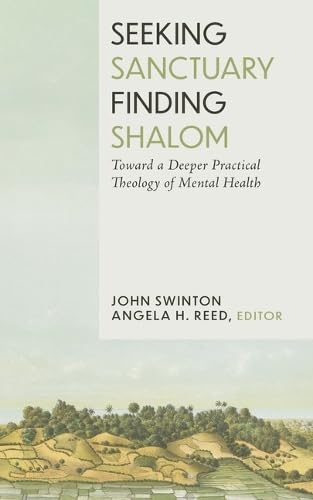
John Swinton, Angela Reed, Eds.
( Baylor UP )
What if our well-intentioned efforts to promote mental health inadvertently perpetuate systems that cause mental unwellness? What if the resilience we encourage only equips individuals to endure rather than challenge structures detrimental to their well-being? Why do mental health experiences vary so drastically across cultures, with Western societies seemingly posing the greatest challenges for certain conditions? Against the backdrop of escalating ecological dramas that devastate our world and its climate, do we ever wonder what ecological suffering might imply for our mental health? With this poignant, impassioned book, John Swinton invites us to begin exploring avenues toward addressing these daunting and interrelated issues.
Seeking Sanctuary, Finding Shalom proposes that we think theologically about mental health as a matter of the collective body of human beings and the welfare of creation. Swinton contends that the ways in which we structure creation―relational, social, cultural, political, spiritual―has a profound impact on our mental health. Failing to recognize the broader dimensions of the task of mental healthcare, we might only ease the severity of a pain or a disease without removing the cause and so never offer genuine healing that brings about peaceable connection with God, self, others, and creation.
Guided by the biblical concept of shalom―a form of peace crucial for our understanding of mental health(care)―Swinton takes into consideration the complex and creational roots of human psychological suffering and offers a model of human flourishing defined not by the absence of pain, suffering, and distress, but rather by the presence of God. Such a model seeks not only to deal with the immediacy of the human plight but also to view it within the context of Jesus’s cosmic mission to reconcile himself with all things. And so, Swinton contends, as we broaden our conception of mental wholeness to encompass creation at large―the land under our feet, the air in our lungs, the geographical places in which we live and love, as well as the spheres of politics, economics, and culture―we begin the hard and necessary work of repairing dissonance, instability, and mental ill-health. This book does not offer a comprehensive strategy, but it does gesture toward a more holistic, more Christoform theology of mental health. Every journey begins with a first step.
<<<<< PREV. PAGE |
NEXT PAGE >>>>>
PAGE 4 of 5
 Reading for the Common Good From ERB Editor Christopher Smith "This book will inspire, motivate and challenge anyone who cares a whit about the written word, the world of ideas, the shape of our communities and the life of the church." -Karen Swallow Prior Enter your email below to sign up for our weekly newsletter & download your FREE copy of this ebook! |
 Understanding Christian Nationalism [A Reading Guide]
 |
 Most Anticipated Books of the Fall for Christian Readers! Most Anticipated Books of the Fall for Christian Readers!
|
 Hilarious One-Star Customer Reviews of Bibles Hilarious One-Star Customer Reviews of Bibles |