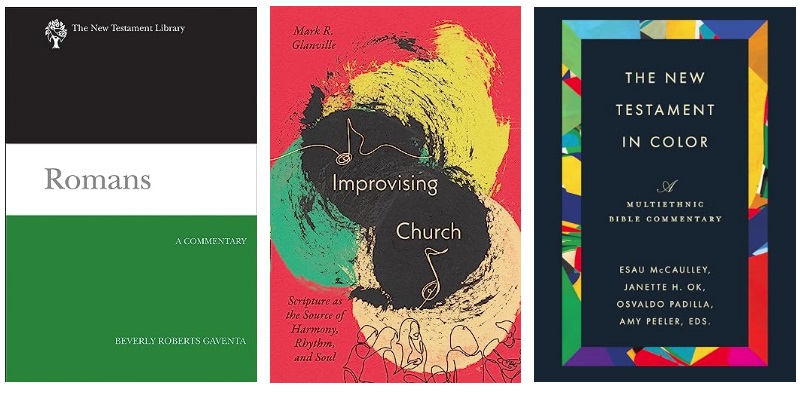

Here are some excellent new theology books * that were released in November 2026 :
* broadly interpreted, including ethics, church history, biblical studies, and other areas that intersect with theology
See a book here that you’d like to review for us?
Contact us, and we’ll talk about the possibility of a review.

The Crisis of Biblical Authority: Interpreting Scripture Responsibly When Christians Disagree
John H. Walton
( IVP Academic )
How Flawed Interpretation Disrespects the Bible and Divides the Church
The Crisis of Biblical Authority is noted biblical scholar John H. Walton’s response to one of Christianity’s most pressing challenges: the damage done when believers treat the Bible as a tool for advancing their own agendas rather than as a sacred text to be faithfully understood.
Christians agree that the Bible has authority, but it can be difficult to identify where that authority resides in the text. Without a clear framework for reading Scripture faithfully, we risk leveraging its authority for our own interests, causing damage to our churches and fractures to our witness. If our methods only reinforce our own ideas, we are at risk of following our own word rather than God’s.
At its worst, this kind of individualist interpretation doesn’t just lead to mild disagreement, it fuels conflict between believers and has even been used to justify the dehumanization of others. Even further, to weaponize Scripture in service of our own agendas is to abuse the very text we claim to hold sacred.
Walton shows the way forward in learning to read the Bible well and developing appropriate approaches to these issues vital to our faith. He presents a clear, step-by-step hermeneutical framework for interpreting Scripture that remains faithful to the text without overstepping its boundaries. The Bible’s authority isn’t found in how we think it should work; rather, interpretation should focus on the author’s original intent. The result is a thoughtful approach to biblical interpretation that takes the Bible seriously without falling into individualism.
Walton explores four levels of understanding needed to read the Bible responsibly:
Answering the question, “What is the Bible and how does it function?”
Defining the scope of authority within the text
Articulating a method to prioritize understanding the authors’ intent
Practical procedures that guide productive biblical interpretation
This book doesn’t seek to establish the Bible’s authority for its own sake, but for how it shapes the way Christians understand, interpret, and apply that authority in their lives. Walton offers a consistent way to appeal to the Bible’s authority that moves beyond prooftexts to shape our thoughts, hearts, and lives responsibly.
This book is perfect for pastors, students, and informed lay readers seeking to understand hermeneutics, and it serves as an excellent introductory text for biblical interpretation courses. Whether you’re a longtime fan of Walton’s acclaimed Lost World Series or new to studying biblical interpretation, this accessible book invites you to take seriously the words of the Bible and to be faithful to the intent of the authors that carries the authority of God.
ADVERTISEMENT:


Reading the Reformation: How Theologians, Printers, and Scribes Fueled the Growth of Protestantism
Zachary Purvis
( Baker Academic )
During the Reformation, theologians wrote, colleagues annotated, scribes recorded, and printers toiled, bringing Protestant doctrine and practice to life and transforming European society. Demonstrating the benefit of integrating histories of culture and scholarship with historical theology, this book invites readers to view the Reformation and its writings with fresh eyes.
Instead of focusing solely on the printing press as an agent of change, Reading the Reformation recalls the forgotten methods of writing, annotating, publishing, and preserving texts by key Protestant reformers, from Martin Luther to John Calvin, from Martin Bucer to the Westminster Assembly. Zachary Purvis covers a broad range of topics, meticulously illuminating the physical and mental labor behind the texts that fostered the Reformation.
This book is an indispensable resource for students, scholars, history enthusiasts, and anyone interested in the transformative power of the written word during one of the most pivotal eras of European history.
<<<<< PREV. PAGE |
NEXT PAGE >>>>>
PAGE 3 of 5
 Reading for the Common Good From ERB Editor Christopher Smith "This book will inspire, motivate and challenge anyone who cares a whit about the written word, the world of ideas, the shape of our communities and the life of the church." -Karen Swallow Prior Enter your email below to sign up for our weekly newsletter & download your FREE copy of this ebook! |
 Understanding Christian Nationalism [A Reading Guide] |
 Most Anticipated Books of the Fall for Christian Readers! |
 Hilarious One-Star Customer Reviews of Bibles |