
Finding Spiritual Safety
Lianna Chong and Abram Kielsmeier-Jones
 Building a Safer Church
How to Spot Spiritual Abuse, Assess Your Community’s Health, and Create a Culture Where People Flourish
Lianna Chong and Abram Kielsmeier-Jones

NavPress, 6 April 2027.
Buy Now: [ BookShop ] [ Amazon ] [ Kindle ]
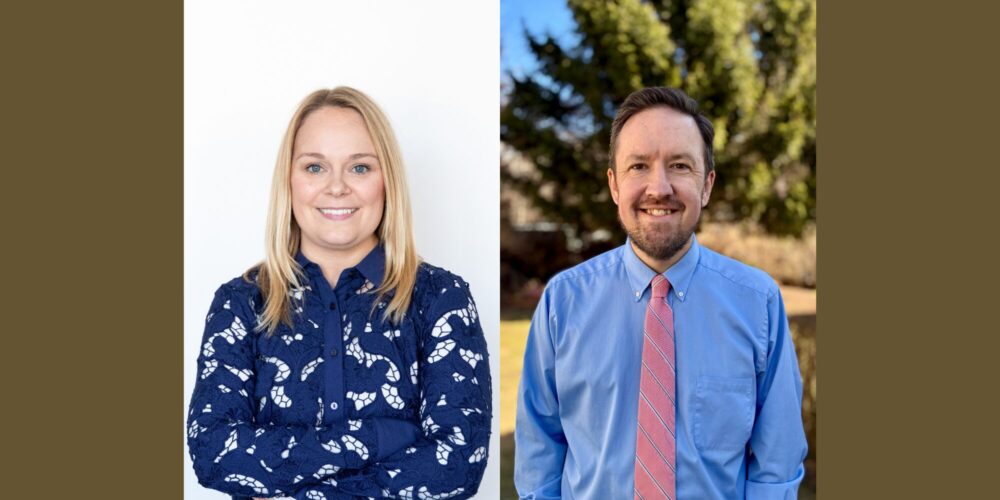
Each of you has experience with a spiritually abusive religious environment. In broad strokes can you share how you realized you were in such an environment?
Not realizing we’re in an abusive environment can make the experience even more damaging. This is not the fault of the ones targeted—in fact, leaders who spiritually abuse count on going undetected.
Learning terminology has helped me [Abram] identify spiritual abuse. The first time I heard words like gaslighting, coercive control, and moral injury, I thought: There are words for those awful things I’ve been experiencing? Others feel them too?
Words can be insufficient, though. I’ve learned to trust the knot in my stomach. I’ve learned that my nervous system can react faster than my ability to articulate my experience. I know to pay attention to that lurking but undeniable sense that something is off. God speaks to us through our nervous systems! Rather than seeing our emotions as untrustworthy, fleeting, or even deceitful, I want to appreciate gut responses as protective, an important aspect of being made in God’s image. For me it often starts with an uneasy feeling: This doesn’t add up. Something’s going on here.
It took conversation with my spouse to realize how toxic one of my leader’s actions were. Immediately she said, “Abram, that’s abusive!” And I’d already begun drafting a book about this stuff! No matter—we need other people to help us spot spiritually abusive behaviors.
For me [Lianna], the patterns first became clear when I started researching spiritual abuse. Almost every example in the literature was reflected in the experiences of my community around me. I also saw clear signs of traumatic stress in those who worked closely with our leader. They had lots of trouble sleeping, illness and leaves of absence, tension and conflict in other relationships, and feelings of being constantly under threat. I had been training caregivers on signs of compassion fatigue and traumatic stress, so I recognized the markers of trauma pretty quickly.
When you developed your Spiritual Safety Scale, you deliberately focused on behavior. What behaviors did you focus on, and why behaviors as opposed to other variables?
I [Lianna] chose to focus on specific behaviors by leaders and groups that either create spiritual safety or perpetuate harm. From what I observed in my own community, many people had good intentions, but the ways they responded minimized harm and caused more damage. Saying things like “but I’ve never seen him act that way” implies that just because someone hasn’t been spiritually abusive towards you, they haven’t abused someone else. To me it’s like saying “but that person never robbed me!” when someone is accused of robbery. It has no bearing on the actual offense–and it invalidates the victim’s reality.
I kept seeing the core truth of the matter obscured by discussions around intention: “I’m sure he didn’t mean to hurt you. His heart is in a good place.” At the same time, the behaviors reported about our leader were absolutely unacceptable (and much worse than what I had seen working with secular organizations). Even if someone is coming from a good place, if their actions are causing damage, they are still responsible.
Behavior can be observed; intentions can’t. If we can identify “when a leader does this, it is harmful,” then we shouldn’t accept when a Christian leader continues to behave that way. We can still work with leaders and provide support to help them address harmful behavior, but if these patterns continue, leaders need to be held accountable.
Finally, behavior can change, and we can measure changes in behavior. So tools like the Spiritual Safety Scale (S-SAFE) give us a way to make harm and improvement concrete.
You note that one of the challenges about spiritual abuse is the attachment of divine authority to positional leaders, which can get in the way of accurate assessment. What are some of the dynamics in religious environments that make confronting abuse and assessing safety particularly difficult?
In our forthcoming Building a Safer Church (NavPress, 2027) we identify theological and organizational-cultural dynamics that enable abuse.
For example, Christian communities mistake silence in the face of abuse for peacekeeping (don’t rock the boat). We mistake leniency for mercy (he’s under a lot of stress). We mistake a failure to defend the vulnerable for respect for authority (but he’s our pastor, and God/we called him here). We mistake cheap reconciliation with no truth-telling for forgiveness (why can’t you forgive him and move on?). We mistake traumatic responses for suffering and expect people to magically triumph over it (rejoice in these sufferings!).
Sadly, our book’s discussion of these and other dynamics will forever be incomplete because—like an adaptive virus—churches and faith-based organizations keep finding new ways to enable abuse. Yes, there’s the old “playbook” spiritual abusers seem to all have access to, like how to misunderstand, misapply, and use Matthew 18 as a bludgeon.
But it seems like every week I [Abram] am seeing more organizational dynamics that enable spiritual abuse. Like the Substack- and Instagram-ready phrase “befriend your suffering,” for example. (No, thanks!) Or the oft-adopted group community agreement of “assume best intentions.” Spiritual abusive behaviors thrive under these kinds of practices, because spiritually abusive leaders use these niceties to their advantage, however well-meaning the beliefs may be.
These are a lot of dynamics to track in real time. So a core practice communities can consider cultivating more deeply is discernment. How can we know if this leader’s apology is sincere or just for show? How can we tell the difference between true vulnerability and “fauxnerability”? When two groups in the church assess a situation differently, and both endorse their view with “Thus says the LORD,” how do we know which “thus” is true?
Where can people find the survey and how do you advise people and groups to
use it?
Anyone can take the survey for personal use at www.spiritualsafetysurvey.com. If you’ve experienced things in your church or organization that seem off, or if people in your community have raised questions about spiritual abuse, taking the survey can help you gain clarity on the overall health of your church or organization.
If you have experienced spiritual abuse, taking the survey can validate your experience and help you describe it to others. You might consider sharing it with other people who share your concerns and sharing your score with those who have the power to hold leaders accountable.
The survey can also be used as part of an organizational assessment administered through the Spiritual Safety Center (spiritualsafetycenter.org). In some cases, groups might want to use the survey to determine if spiritual abuse has occurred, or whether it’s reached a level that warrants some intervention. In other cases, teams and organizations can use the survey proactively to assess their spiritual safety and identify areas for improvement. Finally, the survey can be used to measure improvement when leaders or teams have committed to change.
 Reading for the Common Good From ERB Editor Christopher Smith "This book will inspire, motivate and challenge anyone who cares a whit about the written word, the world of ideas, the shape of our communities and the life of the church." -Karen Swallow Prior Enter your email below to sign up for our weekly newsletter & download your FREE copy of this ebook! |
 Understanding Christian Nationalism [A Reading Guide]
 |
 Most Anticipated Books of the Fall for Christian Readers! Most Anticipated Books of the Fall for Christian Readers!
|
 Hilarious One-Star Customer Reviews of Bibles Hilarious One-Star Customer Reviews of Bibles |